
Miso Honey
Baked Pears
Why Pears Are a Fall Favorite in Traditional Chinese Medicine
In TCM, fall is associated with the Lung system and the Metal element. It's also a season associated with dryness, which can show up in our bodies as dry skin, chapped lips, dry nasal passages, a scratchy throat, or a dry cough. One of the principles of Chinese dietary therapy is to eat foods that help support the body through these seasonal changes. Pears are particularly loved for their sweet, cooling, and moistening properties. Traditionally, they're used to generate fluids, nourish the Lungs, and help address dryness.
I wrote more about the season of fall in this blog post too!
I also have a personal story to share when it comes to pears. When I was in graduate school, I developed asthma for the first time during late fall and early winter. I was exhausted and depleted, experiencing a persistent dry cough, wheezing, and dry skin. My professor at the time kept telling me to eat baked pears. She was so convinced that they would help that she wouldn't stop mentioning it until I finally gave them a try. Her recommendation was simple: baked pears with honey, ginger, and cinnamon. It was a combination of the naturally moistening properties of pears and honey with the warming qualities of ginger and cinnamon. I was instructed to eat one pear a day for 7–14 days. So, I did. And what do you know? I noticed a significant improvement in my cough and wheezing!
Now, every year when fall rolls around, pears make their way back into my kitchen. It's one of those little traditions from my TCM education that has stuck with me over the years.
A little TCM tip: Pears are naturally cooling, so if you tend to run cold or experience sluggish digestion, you definitely want to try enjoying them cooked rather than raw. Baking, steaming, or simmering pears with warming ingredients like ginger and cinnamon creates a comforting preparation for the cooler months.
Here are two of my favorite ways to prepare pears and enjoy their wonderful seasonal qualities:
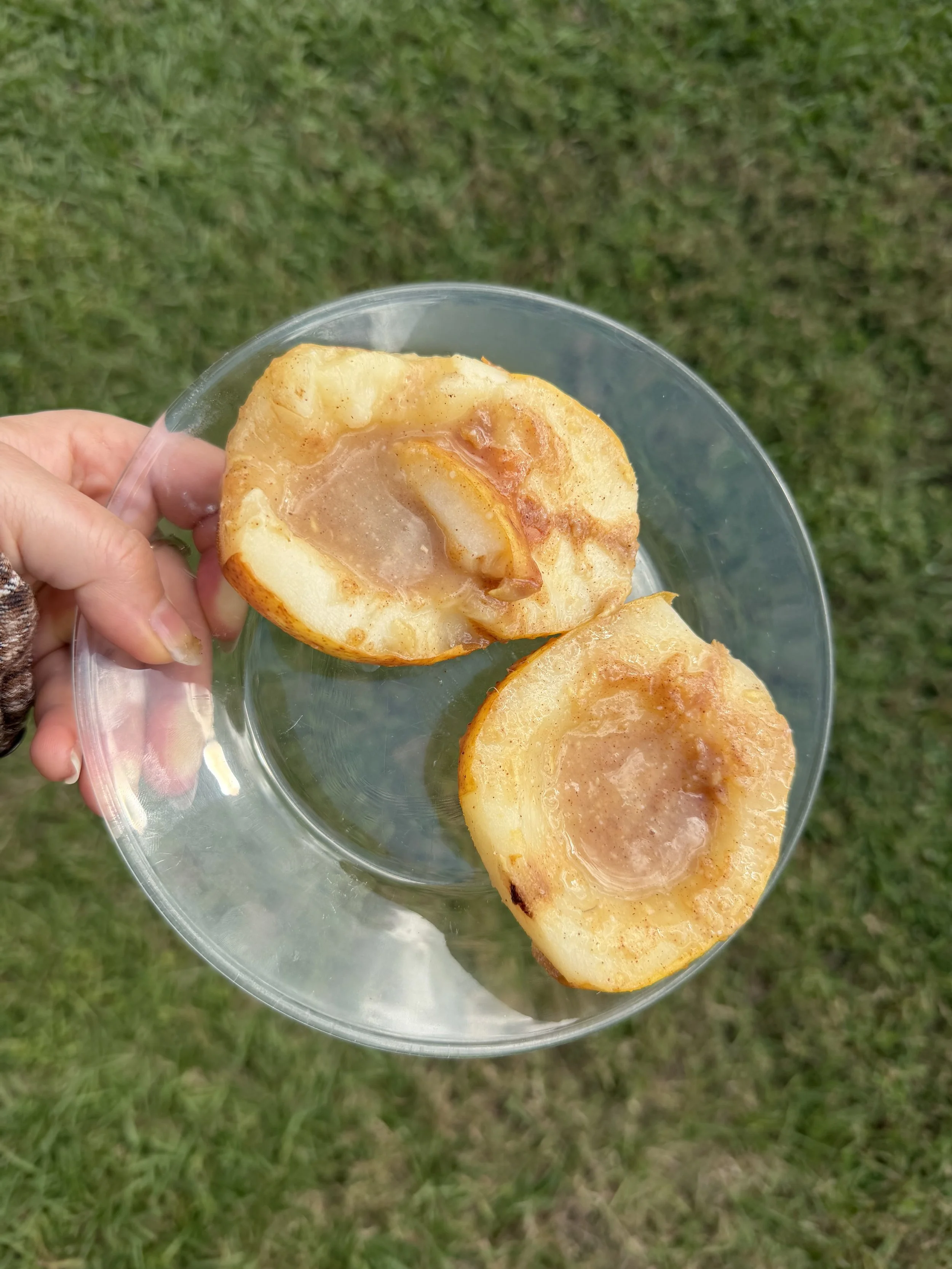
Baked Miso Honey Pears— Baked pears with honey is the traditional way to eat pears in the fall. I like to add some warming spices, like ginger and cinnamon to support digestion. I also leave the peel on for added fiber and antioxidants. I am also obsessed with miso, so adding the white miso paste adds some umami flavor that balances very well with the spices. Miso in TCM is also warming and tonifies the blood.
Miso Honey Baked Pears
2 pears, cut in half and cored
2 tablespoons of honey
1 tablespoon of white miso paste
3 teaspoons of grated fresh ginger
1 teaspoon of ground cinnamon
3 tablespoons of water
Preheat your oven to 375°F. Slice the pears in half lengthwise, scoop out the cores, and remove stems.
Arrange the pears cut-side down in a small baking dish.
Combine the honey, miso paste, ginger, and cinnamon. The mixture will be thick. Scoop half of the mixture and spread it over the peel side of each pear. Reserve the remaining half for later.
Pour the water into the bottom of the dish to help keep the pears moist as they bake.
Bake for 18–20 minutes, depending on the size and ripeness of your pears, until soft and easily pierced with a fork.
Remove from the oven and carefully flip the pears cut-side up. Spoon the remaining honey miso mixture over the exposed flesh.
Switch the oven to broil and broil for 2–3 minutes, watching closely so the honey doesn't burn.
Remove from the oven and spoon the warm honey miso juices over the pears before serving.
Notes:
Eat 1 pear per day for 7-14 days if you are experiencing dryness symptoms.
The miso is optional if you do not have it. I love the umami and salty flavor it gives the pears.
Tonifying Pear Soup— making a soup or tea is another very traditional way to eat pears. This also has the pears with the peel on, honey and cinnamon. I added goji berries and jujubes to extra support. Goji berries (Gou Qi Zi) are slightly sweet and used to nourish the liver and kidney yin and blood. Winter is the time of the kidneys in TCM, so winter and as it gets colder is a great time to eat goji berries. They are also moistening and immune supporting. Jujubes (Chinese red dates) add a sweet and warming property to this soup. They help tonify qi and blood and digestion.
Tonifying Pear Soup
2 pears, cored and cut in large chunks
2 cups filtered water
1 cinnamon stick (or ½ teaspoon of cinnamon)
4 jujubes/ Chinese dates (pits removed)
1 tablespoon of goji berries
1-2 tablespoons of honey
1 tablespoon of lemon juice
Remove the cores of the pears then slice them in large chunks. I prefer to keep the peel on for added benefits but you can remove.
Add pears, water, cinnamon and jujubes into a pot.
Bring to a gentle boil, then reduce the heat to a simmer for 15-20 minutes, until the pears soften.
Add the goji betters during the last 5 minutes of cooking.
Remove from heat and stir in the honey and lemon juice.
Enjoy warm, sipping the broth and eating all of the softened fruit.
Notes:Eat 1 pear per day for 7-14 days if you are experiencing dryness symptoms.