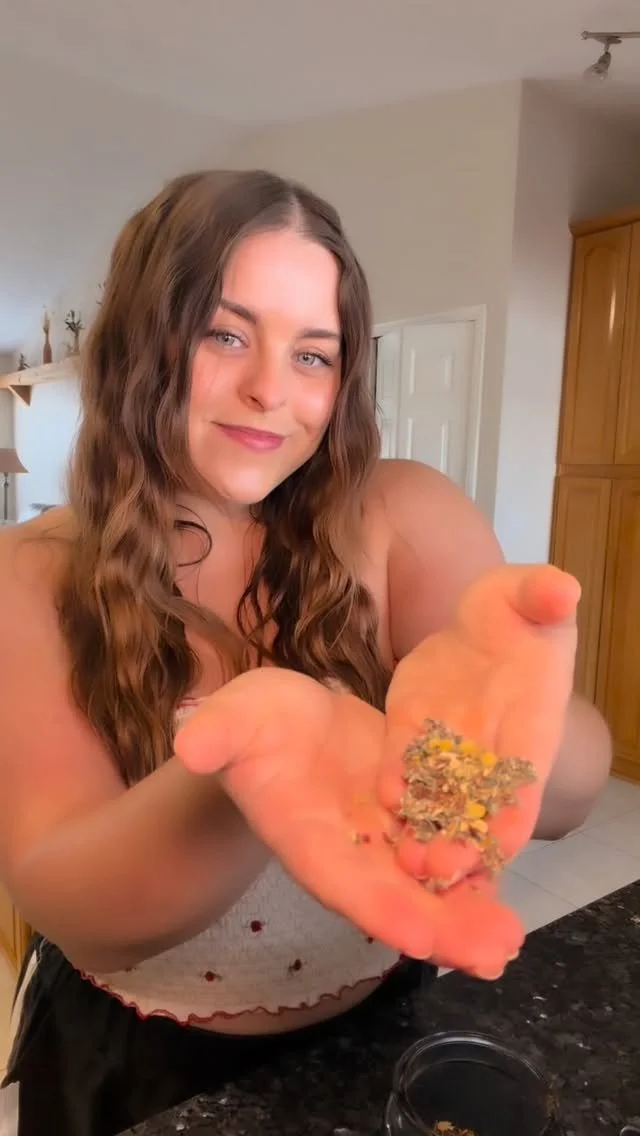
When I first began my journey studying Traditional Chinese Medicine, herbology was one of the subjects I was most excited about. I've always been drawn to the power of what God has placed on this earth and the incredible ways nature can support and nourish us. One of the things I found most fascinating about studying Chinese herbal medicine was learning each herb individually: its properties, energetics and functions. But what makes Chinese herbal medicine particularly beautiful is understanding how herbs can be combined synergistically to create formulas, each working together with a specific purpose to help bring the body back into harmony. It isn't simply about finding an herb for a symptom. It's about understanding the individual, recognizing patterns of imbalance, and thoughtfully selecting herbs that work together to support the body's needs. This is one of the reasons I fell in love with herbal medicine, and why I find its role in women's health particularly fascinating.
How Traditional Chinese Medicine Understands Hormonal Health
In Western medicine, we often look at individual hormones such as estrogen, progesterone, testosterone, cortisol, thyroid markers and insulin to understand what's happening in the body. These measurements can definitely be incredibly valuable, especially when investigating conditions like PCOS, endometriosis, irregular menstrual cycles, and PMS.
Traditional Chinese Medicine approaches the body a little differently. Rather than focusing on individual hormone levels, TCM looks at the relationships between the body's systems and the patterns that may be contributing to symptoms. For example, two women might both experience painful periods, but the underlying patterns contributing to those symptoms could be completely different. One woman might experience significant cramping, breast tenderness, irritability, and bloating before her period. Another might struggle with fatigue, light menstrual bleeding, dizziness, and a longer cycle. Although they may share some symptoms, their bodies may need very different types of support.
TCM practitioners look at things like:
Qi (vital energy): The movement and function of the body's energy. When Qi becomes stagnant, it can contribute to PMS, breast tenderness, irritability, and menstrual discomfort.
Blood: In Chinese medicine, Blood nourishes the body and supports healthy menstrual function. Blood deficiency or stagnation can influence energy, circulation, and menstrual patterns.
Yin and Yang: These represent complementary aspects of the body's physiology. Their harmony is important for regulating warmth, nourishment, activity, and rest.
The Liver, Spleen, and Kidneys: These are particularly important organ systems in TCM's understanding of menstrual health. They have distinct relationships with the movement of Qi, production and nourishment of Blood, and reproductive function.
This is why TCM doesn't necessarily approach every case of PMS, irregular periods, or hormonal acne in the same way. The goal is to understand the pattern behind the symptoms and choose support accordingly.
The Role of Chinese Herbal Medicine in Women's Health
One of the things that makes Chinese herbal medicine unique is that herbs are traditionally prescribed in formulas rather than always being used individually. Different herbs have different properties and functions. They can be combined to complement one another, address different aspects of a TCM pattern, and create a more comprehensive approach to care. Some herbs may be selected to support circulation, while others are traditionally used to nourish blood, move stagnant qi, clear internal heat, or support digestion. The formula is chosen based on the individual rather than simply matching one herb to one symptom, which is why that herb your friend recommended for you that worked for them may not work for you.
My Coming Back to TCM Herbology Story:
Once I finished my four years of TCM school, I founded my in-person clinic and hit the ground running in business ownership. I loved every second of it- seeing new clients and using all of this information to help support them and increase their quality of life. Also during this time, I was working on continuing my education in Functional Medicine so that I would also analyze and order functional lab testing. I was BUSY and without a break from school, passing board exams and business ownership, my hormones began to suffer. For the first time ever, I was experiencing panic attacks and extreme mood dysregulation in my luteal phase. Because I was in the middle of studying functional medicine, that was the approach I took to understand what was going on (I completely ignored the TCM tools that I had. Not proud to admit this!)
I began taking every supplement that was recommended for PMDD with little to no improvement. Then I had a bit of a wake-up call and thought, “Why am I ignoring my own truth? Why am I overlooking the TCM knowledge that I spent all of these years studying and have used to help so many other women?” I had become so focused on understanding my hormones through a functional medicine lens only that I had completely set aside another system of medicine that I knew and loved.
So, I started coming back to my TCM roots. I revisited the way Chinese medicine looks at the menstrual cycle, the relationship between the liver and the movement of Qi, the importance of Blood, and how the body changes throughout the different phases of the cycle. I began looking at my own symptoms through a different lens and exploring how Chinese herbal medicine could fit into my care. It was a reminder that I didn't need to choose between the two approaches. Functional Medicine and Traditional Chinese Medicine have both shaped the practitioner I am today, and I believe there is so much value in understanding how they can complement one another.
More than anything, it brought me back to something I had temporarily lost sight of: the importance of looking at the whole person, not just a collection of symptoms or lab results. And honestly, it reignited my love for Chinese herbal medicine. It reminded me why I was so excited to study herbology in the first place and why I want more women to understand the incredible role it can play in supporting their health.
Spoiler alert: once I started taking herbal formulas for my PMDD pattern, my luteal phase was transformed!
Chinese Herbal Medicine Made Accessible!
The company that I started using during this time was Elix. (Disclaimer- I am an affiliate, but I make an authentic promise that I do now encourage anything that I do not personally use!!)
The reason that I began using them was for a few reasons.
1) They use tinctures, which I love
2) They put emphasis on sourcing and the quality of their herbs, which is hard to find nowadays
3) I knew the formula would be based on my specific pattern because I had to take a diagnosis quiz (and as a licensed herbalist, their formula was on point for what I needed)
And when I tell you that I personally noticed a difference with my symptoms within the first full cycle of using the Cycle Balance Formula, I mean it! They recommend a larger dose for PMDD, so that’s what I did.
Elix is a company that brings Traditional Chinese Medicine into a more accessible format through personalized herbal formulas designed around women's menstrual health. Their approach starts with a health assessment that considers your symptoms and lifestyle. Using TCM principles, the assessment identifies an underlying pattern and helps determine which combination of herbs should be used. Their Cycle Balance formula is designed to help support women experiencing concerns such as PMS/PMDD, menstrual discomfort, bloating, acne, mood changes, PMOS, and irregular cycles.
So if you have been wanting to try out the hype with Traditional Chinese Medicine, but are having a hard time getting access to a practitioner, or not ready to commit to working with someone, I would highly recommend using Elix. I share this honestly, as a practitioner, who just wants to give options for everyone to receive the power of TCM!
If you are struggling with cyclical symptoms and ready to take a truely integrative approach, combining Eastern wisdom with modern testing, that is the work I do.
For more information on my 1:1 coaching:
to book a no pressure information call to learn about the process of working together: